How to Build a Tiny Builders Toy Digging Sensory Bin?
 Jordan HaleStaff Writer
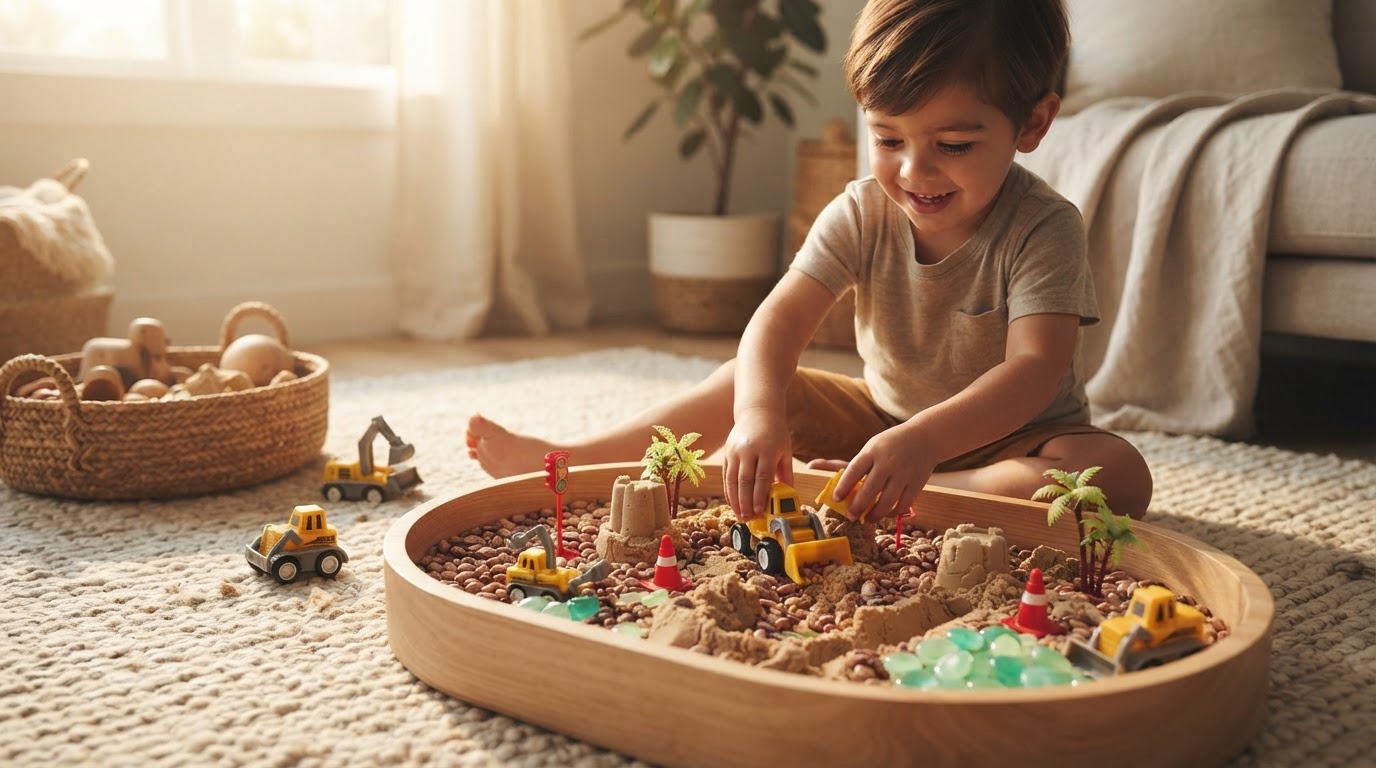
October 12, 2026 — Creating a Tiny Builders Toy digging sensory bin requires a shallow container, a base material like kinetic sand or dried beans, and scaled construction tools to facilitate fine motor development.
I remember the first time I sat on the floor with a bag of pinto beans and a handful of miniature excavators. Parents often seek out these tactile setups to bridge the gap between high-energy outdoor play and focused, indoor quiet time. By using the right structural elements, a simple bin becomes a laboratory for spatial reasoning and tactile exploration.
Which materials work for a Tiny Builders Toy digging bin?
The most effective materials for a digging bin are those that provide enough resistance for scooping while remaining easy to clean, such as kiln-dried sand or polished river stones. The first thing I noticed was how the weight of the material changes the way a child interacts with their tools; heavier substrates like pea gravel require more significant wrist stability than lightweight rice. According to the developmental milestones outlined in the Tiny Builders Toy Three-Point Framework for Montessori Play, selecting a medium that mimics real-world construction sites—like brown kinetic sand—encourages more complex imaginative play. I keep coming back to the combination of dry black beans and small wooden blocks, as the contrast in texture keeps small hands engaged for longer durations. When you integrate a dedicated Montessori Construction Play Set, the varied shovel shapes allow toddlers to experiment with different volumes and weight distributions.
How do you introduce a digging bin to a toddler?
Introducing a digging bin is most successful when you model the physical mechanics of scooping and pouring before stepping back to allow for independent discovery. It turns out that toddlers are more likely to engage in deep play when the bin is presented as a specific task, such as "moving the mountain" from one corner to another. This structured approach aligns with the guidance found in our Selecting a Construction Sensory Bin for Toddler Learning, which emphasizes the importance of clear boundaries and objective-based play. I watched as the initial chaos of scattered beans shifted into a rhythmic cycle of filling and leveling, a process that builds the foundational grip needed for later writing skills. By keeping the tool count low—perhaps just two vehicles and one scoop—you prevent the sensory overload that often leads to bins being tipped over. The goal is to foster a sense of mastery over the miniature environment.
Quick answers
Q: What is the ideal depth for a Tiny Builders Toy sensory bin? / A: A depth of 3 to 4 inches is recommended to allow for full submersion of toy shovel heads without making the bin too heavy to move. This depth ensures that the Tiny Builders Toy excavators can function realistically within the substrate.Q: How often should the filler material in a digging bin be replaced? / A: Dry fillers like beans or rice should be replaced every 3 to 6 months, or immediately if they become damp, to prevent bacterial growth. Using a sealed container from Tiny Builders Toy can extend the lifespan of these materials.
Q: Can sensory bins help with speech development in toddlers? / A: Yes, using a digging bin provides a 100% tactile environment where parents can introduce specific vocabulary like "excavate," "level," and "trench." This contextual learning helps toddlers associate new verbs with physical actions.
Learn more about Tiny Builders Toy at https://tinybuilderstoy.com.