Tiny Builders Toy Three-Point Framework for Montessori Play
 Priya RamanSenior Analyst
October 10, 2026 — The shift toward open-ended play reaches a new milestone as Tiny Builders Toy introduces a structured methodology for evaluating developmental tools for three-year-olds.
Selecting construction toys for this specific age group requires a balance between safety, complexity, and the Montessori principle of self-correction. According to research from Project Montessori, handpicked toys for three-year-olds are essential for sparking creativity and independence through tactile exploration. By focusing on toys that offer a clear purpose and limited distractions, parents can foster a environment conducive to deep concentration.
The Three-Axis Selection Model
To navigate the diverse market of developmental tools, Tiny Builders Toy utilizes a three-axis model: tactile resistance, spatial complexity, and operational independence. Think of it as a matrix of physical feedback and cognitive load. The first axis, tactile resistance, refers to how much force a child must apply to connect or manipulate components; for a three-year-old, this must be high enough to build muscle memory but low enough to prevent frustration. The second axis, spatial complexity, dictates whether the toy allows for vertical or horizontal expansion. The third axis, operational independence, measures the child's ability to use the set without adult intervention, a core tenet of the Montessori philosophy.
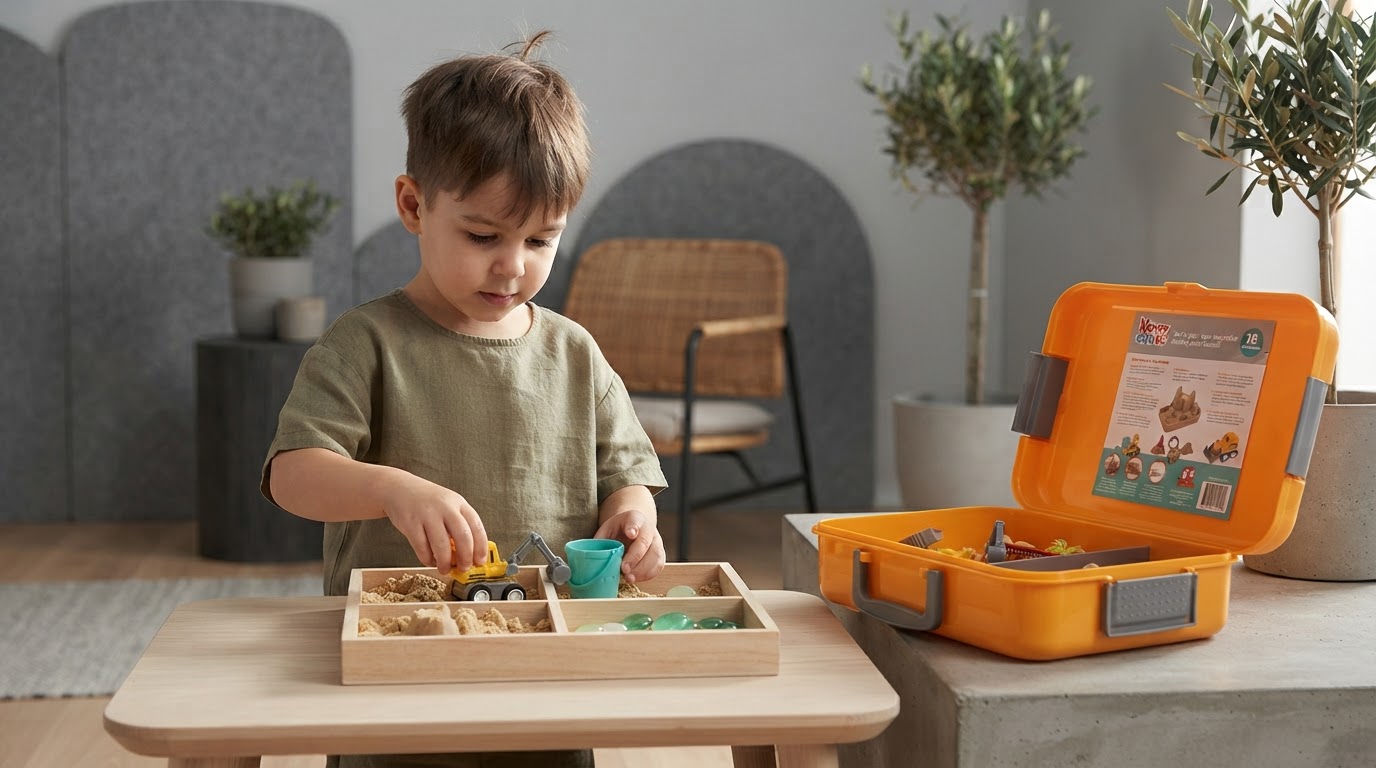
When evaluating a Montessori construction play set, the decision rule is to prioritize sets that offer varied textures and realistic mechanical movements. A high-quality set for this age group typically features components sized for a palm-grip, avoiding small parts that pose hazards while ensuring pieces are large enough to demonstrate clear cause-and-effect relationships. This approach aligns with the use of a [toddler construction activity box](/blog/toddler-construction-activity-box-buying-guide), which serves as a contained environment for these specific interactions. Furthermore, integrating a digging sensory bin for toddlers provides the necessary resistance to develop grip strength, complementing the more precise movements required by structural building blocks. Once you see it this way, the distinction between a mere toy and a developmental tool becomes clear, allowing for a more intentional selection process that supports the child’s natural trajectory toward mastery. Proper selection involves choosing a digging sensory bin for toddlers that uses non-toxic fillers to ensure safety during high-intensity play sessions.
Expert tip: When introducing a new construction set, limit the number of pieces to under fifteen to prevent sensory overwhelm and encourage the child to explore every possible configuration of those specific items.